
Meet Cal
When you think about a family pet, your first thought is probably a dog, cat, or even a ferret. Bees though? Bees don’t usually come to mind first when someone starts talking about pets. For Cal Mutti though, it’s a different story.
Cal and his wife Karen moved into Thirwood Place in July of 2023. Cal is a former beekeeper with over thirty years of experience. He started his beekeeping journey when he was living in Andover MA. At the time his neighbor was a beekeeper but in his older age, he was ready to pass his torch, or brood box, to the next generation. According to Cal he was ready for someone to take over the “heavy lifting” of the beekeeping process for his hive. Cal just happened to be the perfect candidate.
Life on the Farm
That’s not even the very beginning of his exposure to beekeeping though. While growing up on a farm in Ohio, he had a neighbor named Dennis who kept bees behind his garage.
According to Cal, he used to “watch in awe thinking ‘woah that is fascinating,’ he’s surrounded by all these bees and he’s not afraid.”
Cal also mentions the interest he had in watching how the honey is separated from the honeycomb. Dennis was a “woodsy guy” according to Cal and was his biggest introduction to beekeeping. It was Cal’s first-time seeing beekeeping protective gear and learning about how you can sell the honey provided by the bees. A concept that seemed very cool to a little kid.
Eventually this all resulted in Cal becoming a beekeeper himself. This led him to spread his amazing knowledge of bees by presenting at schools throughout Cape Cod. He’s also very involved with the Master Gardner’s Association on Cape Cod. Although he doesn’t travel to schools anymore Cal is still able to educate the younger generation about beekeeping through the Master Gardeners Youth Summer Program.
It all Starts With a box
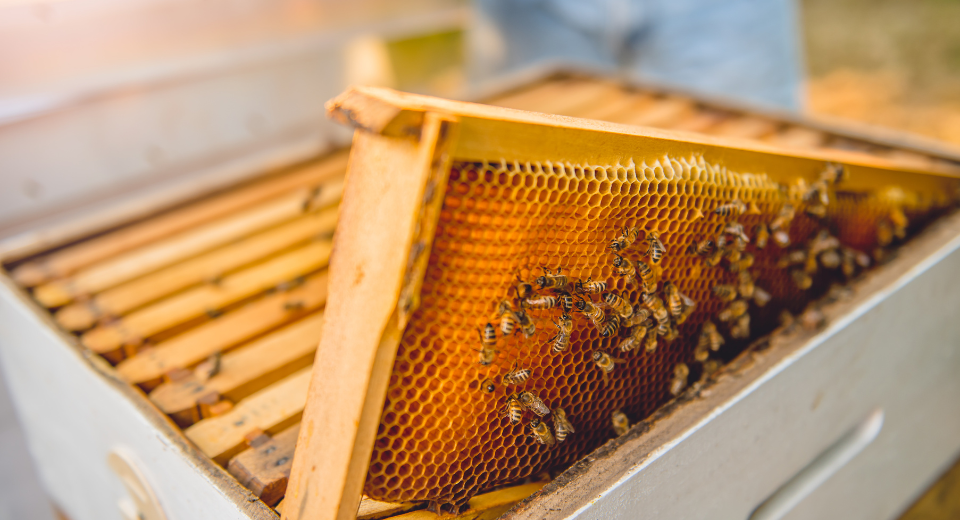
Cal said he really committed himself to his beekeeping journey in his forties and explained the process of starting his hobby as a beekeeper. According to Cal, it all begins with the purchase of a box of bees. Most people begin in April with ten thousand bees and one fertilized queen. If all goes as planned, by July you should have sixty thousand in your hive!
Cal says it’s important to note that beekeeping is all about “creating population in an effort to protect the queen.”
Colony Collapse Disorder
This population matters most during the winter when the warmth from the volume of worker bees is what protects the queen and gets the hive through the winter. One of the leading causes of colony collapse disorder is a low population of bees in the hive during the winter. This started happening because bees stopped coming back to the hive.
Bees are all about making honey, storing honey, protecting their queen and getting through the winter. If they don’t have enough honey stored or the appropriate amount of strength in the hive, then they can’t keep the queen warm enough. The bees that keep the queen warm do so by forming a ball around the queen that’s about the size of a basketball. They keep her warm by shivering together. This friction created by fifteen thousand bees generates enough heat to protect the queen.
Another factor influencing colony collapse disorder is all the different sprays and pesticides being used today. As someone who grew up on a farm, Cal knows better than anyone how important these sprays can be for protecting crops. Especially from things like grasshoppers and mites. You might not realize that you’re inadvertently hurting bees when you spray to protect your crops. Ironically enough, these mites that you spray for ALSO can infect or weaken a hive, preventing it from getting through the winter.
Fun Facts About Bees and Honey
- Honeybees only live 34-45 days
- Worker bees are all female and live 6-7 weeks
- The worker bees work ethic is instinctive and not learned
- Drone bees are all male and it’s their job to fertilize the queen
- Bees only produce wax during adolescence which is days 12-17
- Bees don’t fly out of the hive until 21 days
- Worker bees comprise 95% of the hive
- Bees are social like humans and can’t exist on their own
- Queen bees can live up to three years
- Bees are imported and not native to the United States
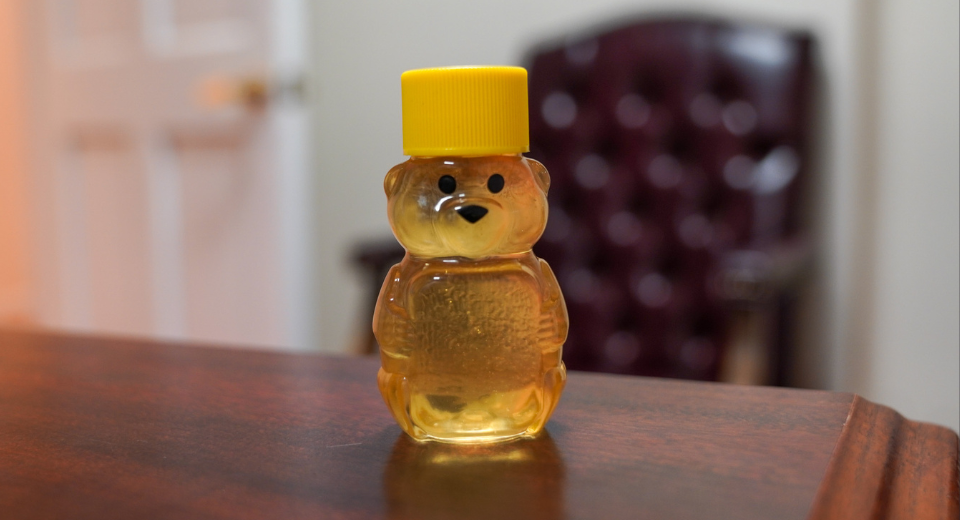
- Honey doesn’t spoil
- Honey was found in the pyramids of Egypt
- Every honey has its own flavor depending on the climate of the region it came from. There is even contest where beekeepers compete by guessing which region each kind of honey came from
Quick Questions for Cal
Do bees help the environment? “Yes, a lot of people keep bees primarily for the environmental benefits and pollination. 1 out of every 3 spoonsful of food we eat had something to do with bees”
What is the purpose of beekeeping? To keep bees healthy to produce honey or for the passion? “It’s a combination… no one generates a lot of wealth through beekeeping. It’s great for fundraising and gifts.”
If I live on the Cape and would like to start my own bee keeping journey, how do I begin? “Get in touch with the Barnstable County Beekeepers Association. The club buys packages of bees from Georgia because of the climate. Georgia happens to be the baby bee producing capital.”
Additionally, when joining the Barnstable County Beekeepers Association, every winter they have a course for beginning beekeepers. This involves eight weeks at the community center taught by experienced beekeepers in the club. You are taught how to build your hive, you can buy a kit from a supply house, and you’re taught what you should and shouldn’t worry about. You also receive a mentor and protective clothing and gloves. They also have a beekeeper’s newsletter. When one beekeeper needs to end his hobby for whatever reason they have a trusted group of people they can share their bees with.
Just like Thirwood Place is a community, bees operate as a community. We feel proud to be able to say that the environment we have cultivated has allowed our residents to live their lives to the fullest.
More News
- Staying Active Later in Life Helps Your Lifespan and Your Health span
- Doing This After Surgery Will Help You Get Out Of The Hospital Faster
- Are You Strong Enough To Keep Up With The Grandkids?
- The Thirwood Difference: Meet our Newest Village Resident…a Tomato
- Are You Avoiding This Important Health Screening?
- New Blog Feature: The Thirwood Difference
- Thirwood Place News: Residents Association Scholarship Fund
- How Your Posture has Gone Downhill – and how to get it Back
