
Thank you Dr. Francis Joseph Hynes
Cape Cod is filled with a wealth of history. From the Pilgrims landing in Provincetown in 1620 to the creation of Cape Cod National Seashore by President John F Kennedy in 1961, the Cape is home to many historical moments. One way to honor some of these moments is through the building of model ships. At Thirwood Place we are lucky enough to have a number of model ships with historical significance. These ships were donated by both residents and friends of Thirwood.
Today we are going to focus on one beautiful model that lives at Thirwood Place. It was built and donated by one of our late and great residents. Dr. Francis (Frank) Joseph Hynes. Dr. Hynes lived at Thirwood Place with his wife Janet for nine years. He was a military veteran who later became an orthodontist. His major hobbies were gardening and building model boats and ships.
If you know anything about model ships you know that it not only takes a great level of skill and intricacy, but these projects are not inexpensive. Some of these models are sold for thousands of dollars and Dr. Hynes was kind enough to donate a few of his models which still live within the walls of Thirwood Place to this day.
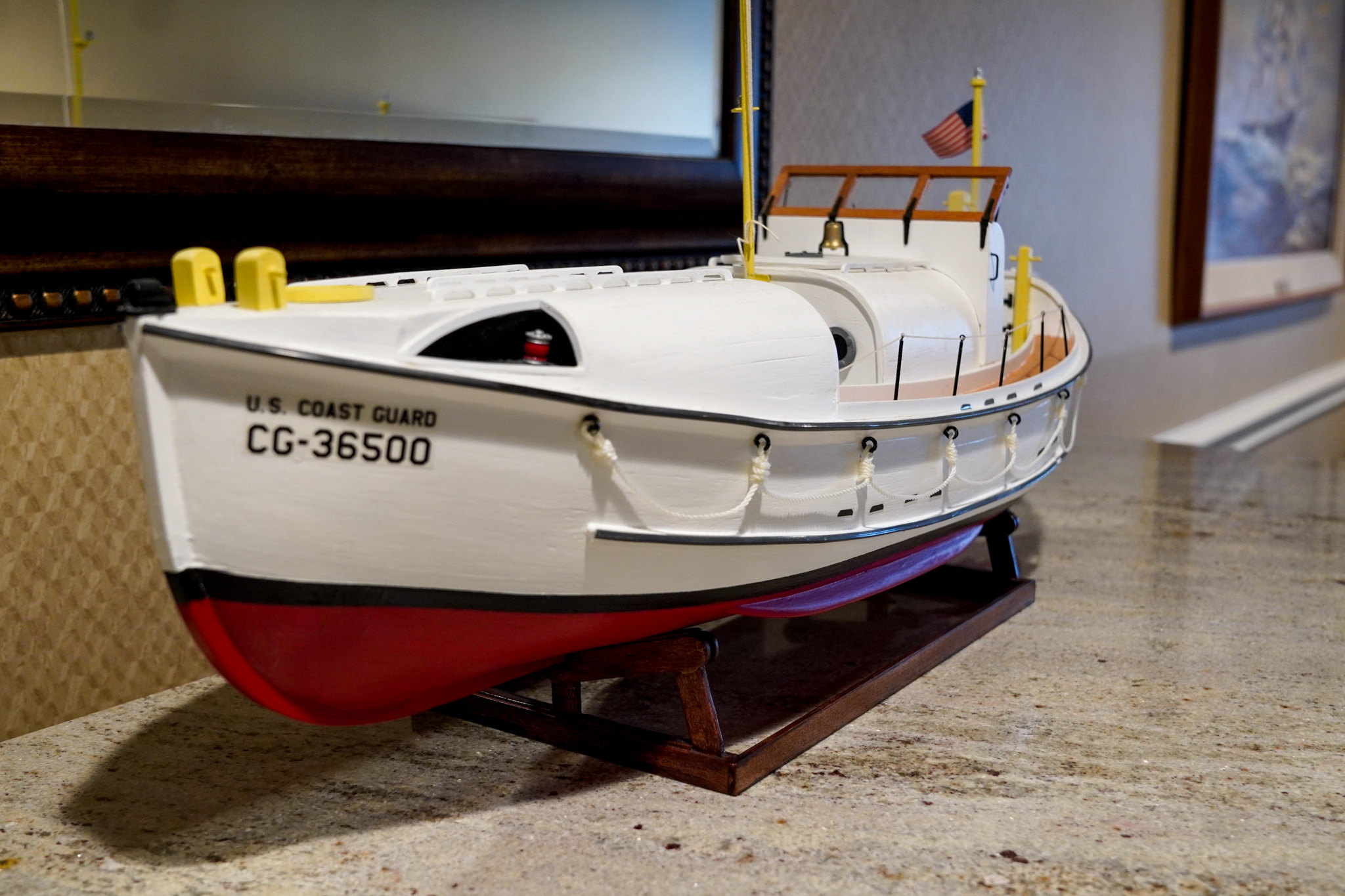
U.S Coast Guard CG – 36500
One of the most famous models we have is on display in our boardroom. It holds a watchful eye over our important administrative meetings and resident committees. If you’ve seen the movie The Finest Hours you’ll know exactly which boat we are talking about. This beautiful model of the U.S Coast Guard CG – 36500 was donated by Dr. Hynes in July 2017. There was even a reception held to celebrate the donation. (Photos below!)
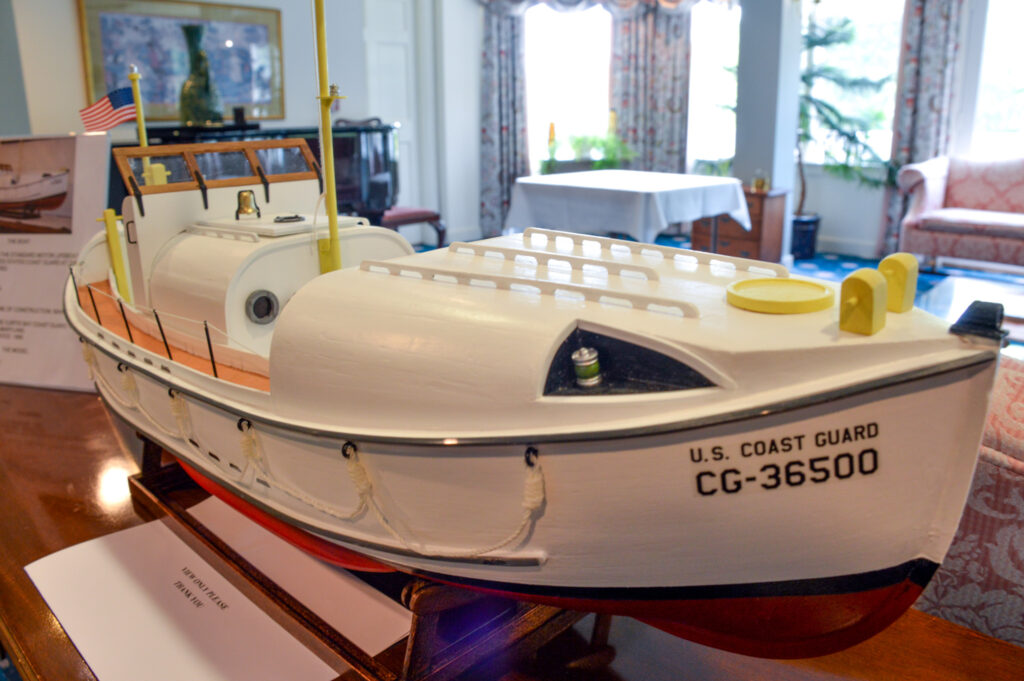
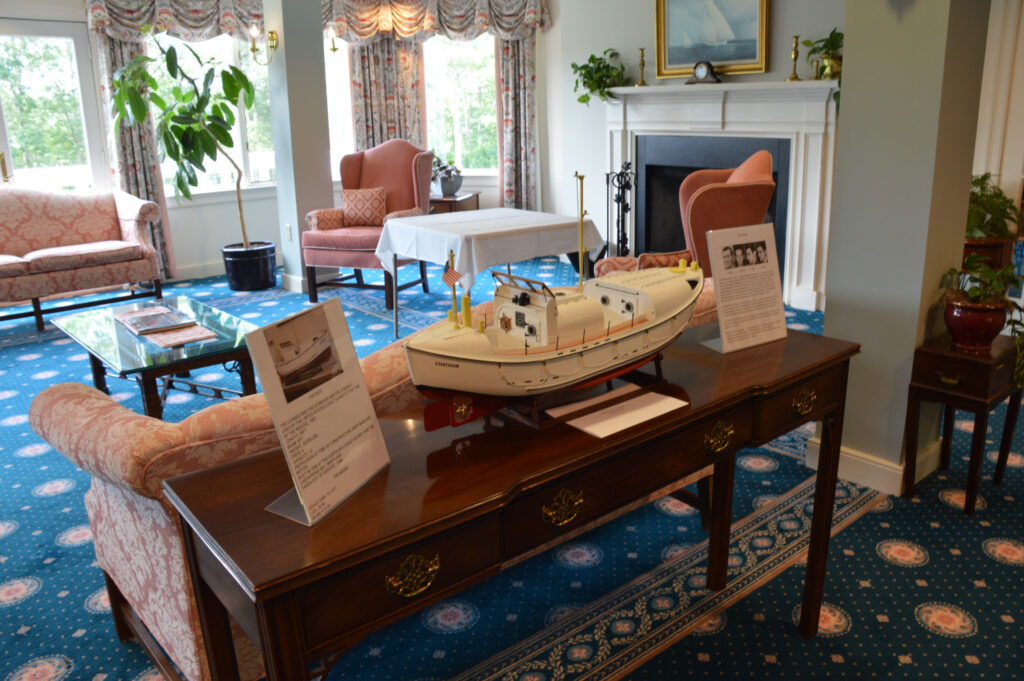
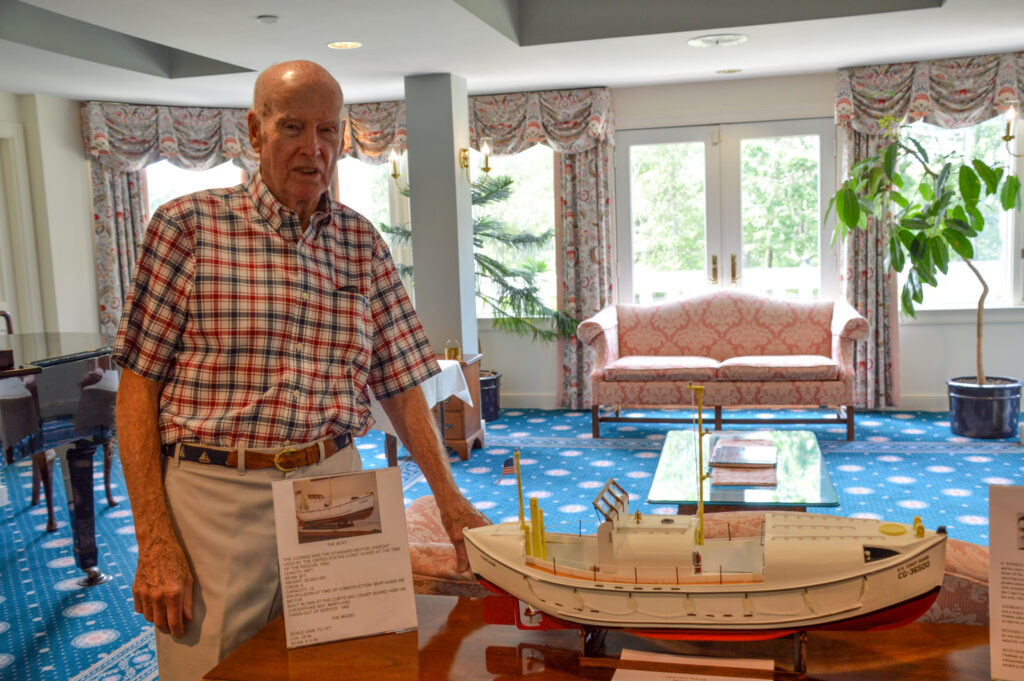
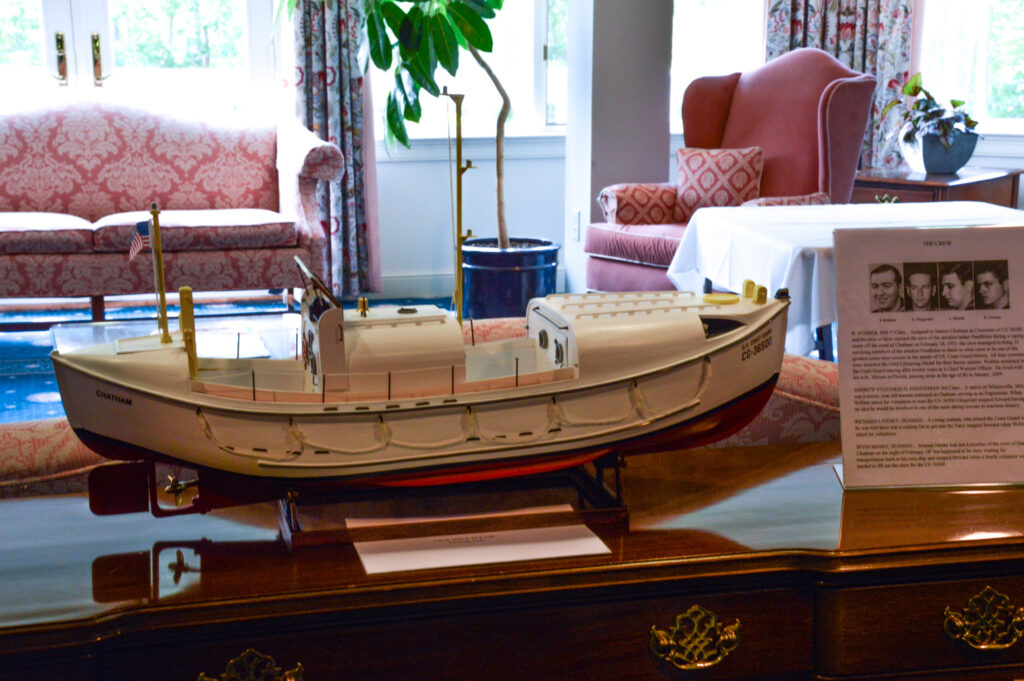
The CG 36500 is responsible for what The Coast Guard refers to as “the greatest rescue by a small boat in it’s history.” On February 18th 1952 Coast Guardsman Coxswain Bernard Webber, Ervin Maske, Andrew Fitzgerald, and Richard P. Livesey risked their lives in what was considered to be a suicide mission. They did this to save a crew of 32 men. Mind you, they managed this in a 36-foot wooden motorboat designed to hold no more than 16 people. Four regular Coast Guardsman at the Chatham Lifeboat Station went to work like any other day but ended up as heroes and Cape Cod legends.
How This Began: The Fort Mercer
This story actually begins with an entirely separate tanker related rescue mission. Earlier in the day on February 18th the Chatham Lifeboat Station got an SOS signal from a different tanker called the SS Fort Mercer. Although the rescue itself was not featured in the film The Finest Hours, it occurred on the same night and the rescue was equally as dramatic. Learn more about the specifics of that rescue by clicking here. Although not featured in the movie, this rescue is so significant because it’s the only reason the Coast Guard was able to discover that the Pendleton was split in two.

By the time the Pendleton split in two it was too late to call SOS. The Fort Mercer wreck aided the Pendleton because it alerted the Coast Guard that there could potentially be another ship in a similar situation. Which was exactly right. Both tankers split in two. It’s also important to note that part of the reason this crew was left to use the CG – 36500 was because the majority of the station’s crew was already helping with the rescue of the Fort Mercer. Most importantly though, the Fort Mercer’s SOS prompted the Coast Guard to search for other ships in the area, leading them to the Pendleton and ultimately beginning their historical rescue mission.
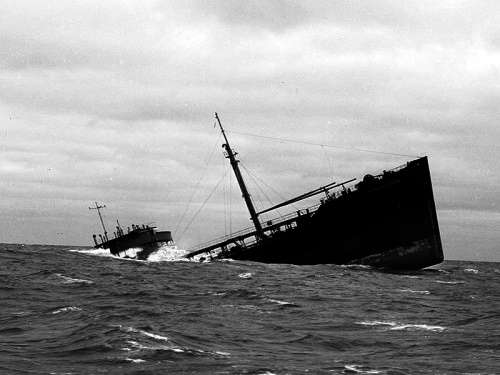
What Happened to The Pendleton
Now, let’s get back to the Pendleton. At the time, it was carrying kerosene and heating oil. The tanker had been traveling back from Baton Rogue, Louisiana to Boston when it ran right into a Nor’easter. Unfortunately, the intensity of the winds and pressure of the waves crashing against the boat cracked the hull leading the boat to split in two. The bow section severed from the stern, and they began to drift away from each other rapidly. Unfortunately, the bow claimed the lives of the captain and seven other crew members. That still left 33 men to be saved and luckily 32 made it and only because the CG-36500 was able to make it over the Chatham sand bar. After the bow and captain were lost, the lead engineer Ray Sybert took control and organized the remaining crew members.
According to Sybert, “the seas were breaking in every direction… the tanker cracked right through No. 8 hold, just forward of midship. Right up to that time we had no warning anything was wrong.”
The destruction occurred so quickly that as mentioned earlier, the equipment to send an SOS was lost. Without the SS Fort Mercer, the Pendleton’s wreckage may never have been discovered. It was later determined that tankers such as the Pendleton and Fort Mercer had a tendency to break in half. Improper methods of welding and the hulls containing something called “dirty steel” were to blame. Dirty steel simply means it contains so much sulfur that it becomes weaker and more susceptible to breakages. Boats built during this time have even been referred to as “serial sinkers.”
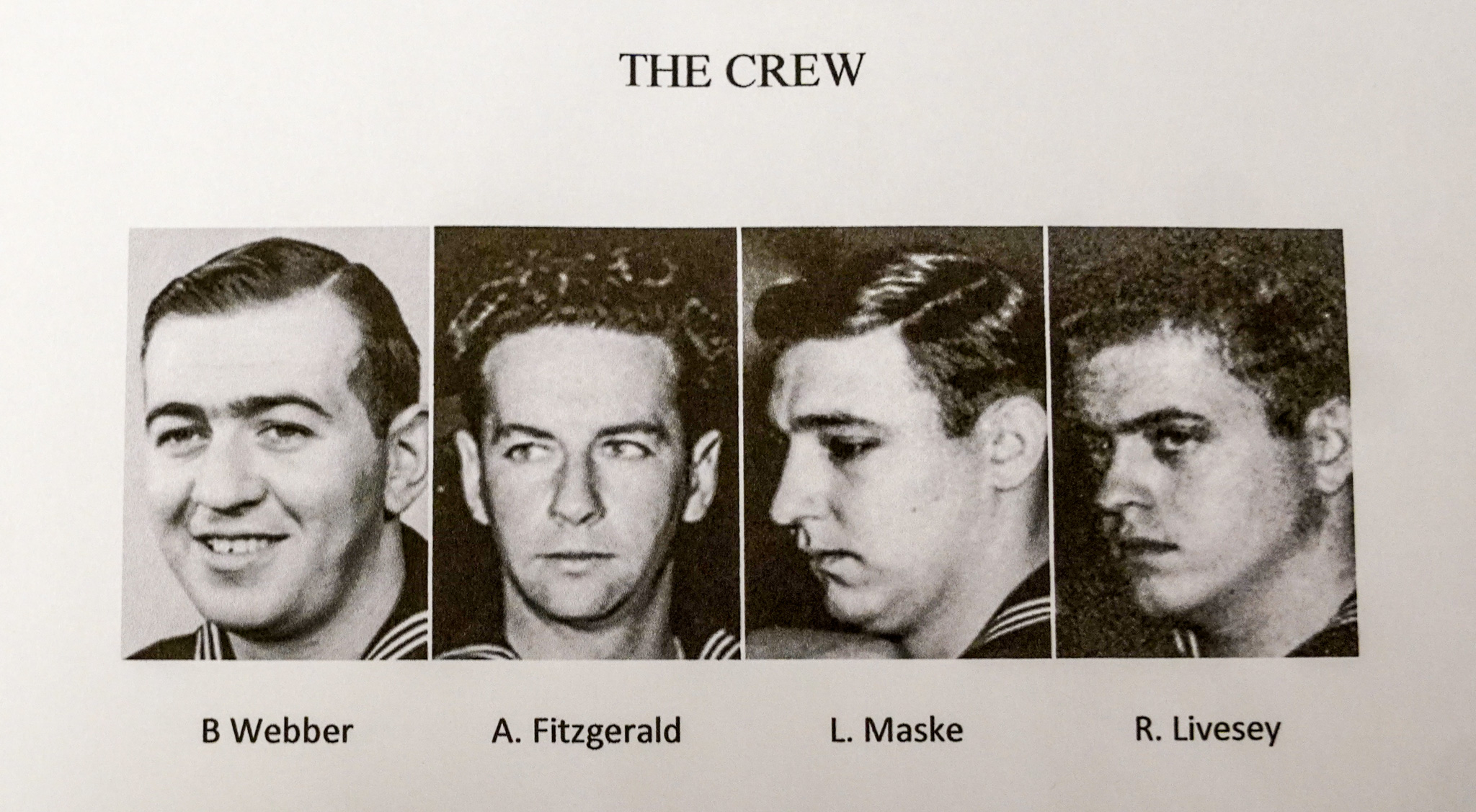
4 Brave Coast Guardsman
Now it’s time to talk about the heroes of this incredible mission. Boatswain’s Mate 1 Bernard Webber, who led a crew of three brave volunteers. The crew included Ervin Maske, Andrew Fitzgerald, and Richard P. Livesey. These men weren’t sure if a rescue was possible. They also weren’t sure if they would even make it out to the Chatham Bar. Let alone make it back alive. They still volunteered. Bravery isn’t a strong enough word to use in this situation. They famously sang the songs Rock of Ages and Harbor Lights as they approached the sand bar and wreckage to help calm their spirits.
As they first crossed the bar, a huge wave smashed into the wooden motorboat launching it straight into the air forcing it to land on its side. Thankfully it was able to right itself before the next wave struck. At the time, nearby Coast Guardsman reported the waves to range from 40-60 feet in height. Not to mention the horizontal snow rain and wind due to the Nor’easter. The brave Coast Guardsman were never deterred by those dangerous roadblocks. The breaker of the ship shattered, as well as the compass due to shards of glass from the broken windshield. With no navigation, they continue.
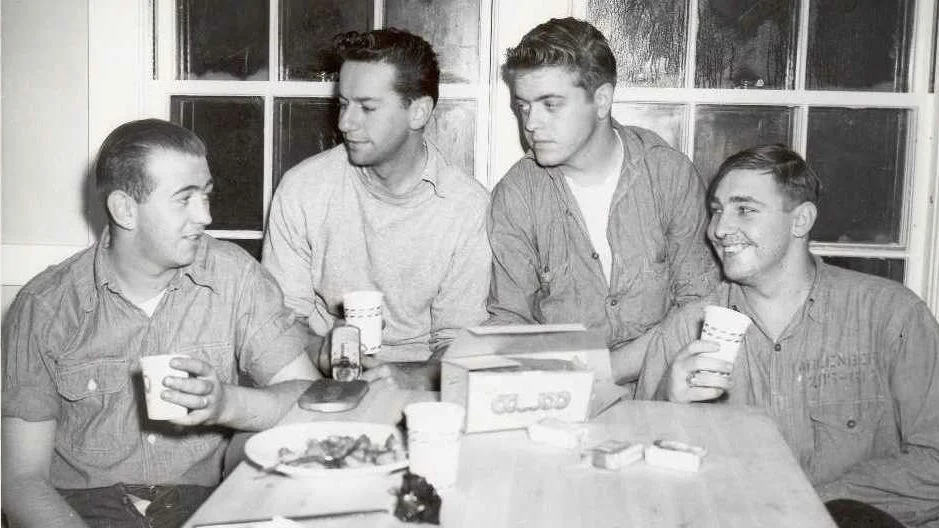
First Hand Account
Captain W. Russell Webster of The Coast Guard described the arrival of the CG – 36500:
One moment, the 32 crew members left on the Pendleton are certain their near death. The next they are all climbing onto a wooden boat that wasn’t even designed to fit them all. But it did. They managed to get everyone onto the rescue boat before the Pendleton sank. The saddest part of this story, is that a Pendleton crew member known as George “Tiny” Myers, didn’t make it. He helped every single crew member onto the CG-36500 and planned on jumping aboard last. Unfortunately, a huge wave shoved the rescue boat onto the tanker ship crushing their unselfish and beloved crew member.
Heros of the Coast Guard and the Cape
Fortunately, even without navigation, Webber was able to get the damaged and over-stuffed CG-36500 to shore. His ability to bring that boat back to shore with NO compass was huge. Not only proved his talent as a Coast Guardsman but proved himself to be a hero as well.
After the rescue, these four men famously refused to be considered heroes even though that’s who they are. According to an article from The Columbus Dispatch “They saw themselves as simply earnest young men grateful to be employed — even in hard, dangerous jobs — at a time when work wasn’t easily found in postwar New England.” Up until that point, Andrew Fitgerald was third class. All he got to do “was paint the bottom” of the boat so he was “glad for the chance” to be involved in the rescue. Such honorable men are a part of The Coast Guard and we are so thankful for their service.
A Word From the Author
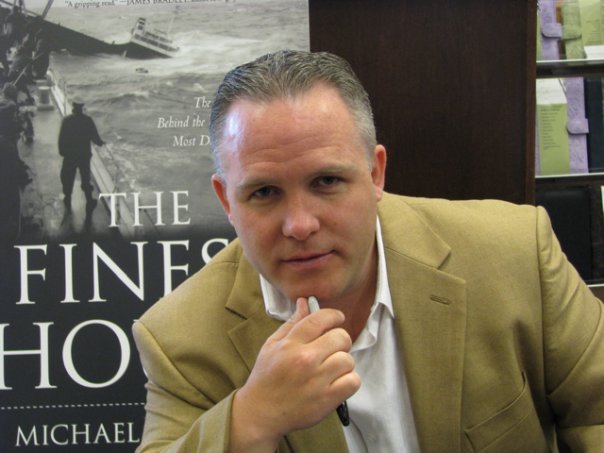
Casey Sherman, journalist, screenwriter and author of The Finest Hours was kind enough to answer some of our questions about his book.
Q: What was your inspiration for telling the story?
A: My brother Todd Sherman inspired me to write this book after he saw a small dedication to the rescue on a rock in Chatham. I had grown up on the Cape but had never heard of this amazing story before. When I visited the Coast Guard boat, CG 36500 at Rock Harbor in Orleans, I knew that I had to write this book, and I also knew that our story would resonate with readers around the world. After the book was published, I met with Oscar nominated screenwriters Paul Tamasy and Eric Johnson (The Fighter) and pitched this story about true courage and heroism. We eventually got Walt Disney Pictures to make the film here on Cape Cod, and the rest is history.
Q: Do you think growing up on the Cape has influenced you as a writer?
A: The Cape has always influenced my writing. At least three of my bestselling books take part on Cape Cod. The Finest Hours, Helltown and even Search for the Strangler, which chronicled my re-investigation of the Boston Strangler case as my aunt, 19 year-old Mary Sullivan, was a Hyannis resident, a 1962 graduate of Barnstable High School and also unfortunately, the youngest and final victim of that notorious 1960’s murder spree.
Q: What is your favorite part of the history behind The Finest Hours?
A: My favorite part is the way that the Coast Guard crew, led by Bernie Webber, found a way to work together during this hellacious winter storm with a singular focus to save lives. I also appreciate how the townspeople of Chatham rallied around these men at sea.
Casey Sherman’s latest true crime thriller “Blood in the Water” is available worldwide TODAY, April 8th. Thank you so much to Casey for contributing to The Thirwood Difference Blog.
More News
- 5 Strategies to Manage Diabetes
- The Thirwood Difference: Model Ships and the CG-36500
- Plenty of Summer Activities Still on Tap at Thirwood Place
- 4 Steps to Achieving and Maintaining a Healthy Heart
- Thirwood Place News: Patio Paradise: Container Gardening for Seniors
- 8 Ways Women can Lower Their Risk of Heart Disease and Breast Cancer
- New Drug can Lower Cholesterol Without a Statin
- C.L. Fornari at The Cove: Spring Dish Gardens
